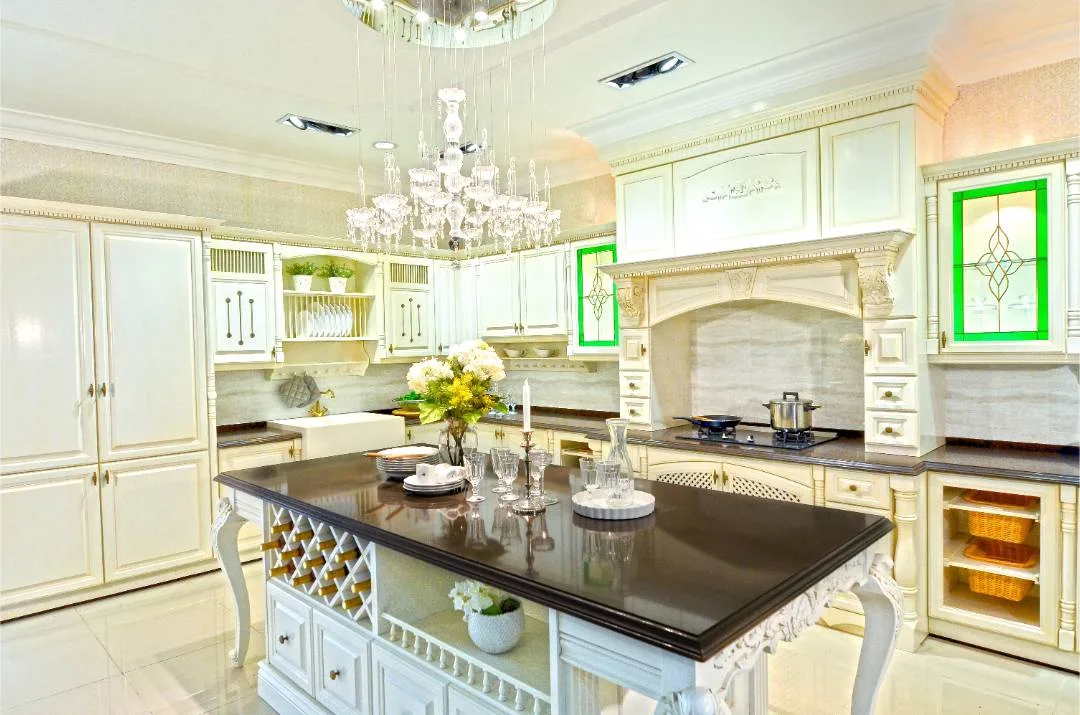
Classic custom kitchen cabinets designed and installed by Rowenda Kitchen.

Sub-pillar

How to compare cabinet suppliers with less risk

When quotes look similar, project quality often comes down to measurement discipline, production control, and handover accountability.

Five checks before confirmation

  1. Ask who owns final measurements and tolerance checks.
  2. Confirm where fabrication happens and who supervises installation.
  3. Review hardware brand, hinge type, and soft-close specification.
  4. Clarify warranty terms in writing before deposit.
  5. Ask for a simple project timeline from survey to handover.
Review your quote with us

The four supplier archetypes

Most Malaysian kitchen cabinet suppliers fall into one of these four buckets

The first archetype is the showroom retailer who outsources fabrication. They have a polished sales process, a beautiful showroom, and they pass the project to a third-party factory. Margins tend to be higher because the showroom layer adds cost, and accountability is split when problems arise. The second archetype is the design-build firm with in-house production. They handle everything from the first consultation through fabrication to installation. Accountability is clear, and pricing tends to be more transparent because there is no intermediary.

The third archetype is the pure factory-direct fabricator with no showroom. Pricing is usually the lowest because there is no retail overhead, but you are essentially buying from a factory with no design service and no installation team. The fourth archetype is the ID firm (interior designer) who hires a fabricator and installer as subcontractors. This is common for full-home renovations that include the kitchen. The ID coordinates but the cabinet quality depends entirely on which fabricator they hire.

Each archetype has its place. For a kitchen-only project, the design-build firm with in-house production is usually the smoothest. For a kitchen as part of a larger renovation, the ID firm with a strong cabinet subcontractor works well. The pure factory-direct option suits homeowners with a clear plan and an installer they trust. The showroom retailer is fine for homeowners who value the showroom experience and are willing to pay for it.

Quote comparison, the right way

How to normalise two quotes that look different

Two kitchen quotes for the same scope can vary by 30-50% and both be honest, because they include different things. The first thing to do is break each quote into the same line items: carcasses (with carcass material called out separately), doors, hardware, benchtop, splashback, accessories, electrical, plumbing, demolition, installation, and project management. Once you normalise the line items, the comparison becomes much clearer.

The most common reason for quote gaps is scope mismatch. One quote includes demolition and tile touch-up, the other does not. One includes electrical rerouting for the new appliance layout, the other assumes the existing wiring is fine. One includes the splashback tile, the other assumes the homeowner will handle that separately. None of these are dishonest — they are just different scopes. The fix is to ask both contractors to quote the same scope and then compare. The cabinet cost line items should be within 10-15% of each other if both contractors are using comparable materials and hardware.

Red flags to walk away from

Five warning signs that warrant a second opinion

A quote that is more than 40% lower than other quotes for the same scope is almost always cutting something — usually the carcass material, hardware quality, or installation time. A contractor who refuses to provide a written scope or who provides one with vague descriptions ("miscellaneous cabinetry", "as required") is signaling that the final bill will be higher than the quote. A contractor who asks for more than 50% of the contract value as deposit before any production starts is taking on more risk than is reasonable; the standard is 20-30% deposit, with the balance due at production milestones.

A contractor who does not visit the site before quoting is making assumptions that will eventually cost you — the as-built dimensions rarely match the floor plan, and a quote that does not account for the gap is incomplete. Finally, a contractor who cannot show you physical samples of the materials they intend to use is signalling that the actual materials may differ from what you discussed. Always insist on seeing physical samples in your home lighting before signing.